Showing posts with label adult fiction. Show all posts

Friday, September 4, 2009

The Servants’ Quarters by Lynn Freed

Houghton Mifflin Harcourt
ISBN 978 0 15 11288 6

If the test of the writer’s craft is in making both good and bad characters equally compelling and readable, then Lynn Freed certainly aces this one. Her book, ’The Servants’ Quarters’, has some supremely unlikeable characters, be it the beautiful and aimless narrator, Cressida, her grasping mother or their wealthy benefactor, Mr Harding . And yet, this slim book with its spare and fluid narrative keeps you hooked and eager to know the fate of these frail, flawed people.

Set in an unnamed location in South Africa in the years following World War II, the story follows the relationship between Cressida and Harding over a decade. When they first meet, she is a precocious nine year old with a father in a coma, facing imminent financial ruin, while he is a much older war veteran who has suffered severe disfigurement in combat. For reasons not immediately clear, he begins supporting the family, even moving them to the servants’ quarters of his own house. His mentoring of Cressida seems avuncular (if condescending) at first, but soon begins to take on more predatory overtones that people around them either do not notice or choose not to. For all her reservations and despite knowing about his other affairs, Cressida is slowly drawn toward the man and he becomes the only stable constant in her life, and her most important influence, as things around her change. She blooms into a beautiful teenager, struggling with her silent love for Harding and her yearning to be free of her mother. She is directionless, bored, and casually toys with men who are besotted with her, even as she waits for Harding to notice her and whisk her away to his world of privilege.

As much as this is a love story, it is also a frank examination of the dynamics between rich and poor in the claustrophobic town that Cressida lives in , and that both she and her mother long to be freed from. Intertwined with these stories is a narrative on the devastating consequences of war, be it on Harding who has survived combat and prisoner camps, or the young Jewish Cressida who is haunted for years by nightmares of German soldiers . This shared anguish becomes a bonding force between the two, even as the people around them remain indifferent to it or choose to move on.

If you are looking for a story about a girl finding her wings and flying away, of a love that sets her free ..this isn't it. A bleakness hangs over the narrative, reminiscent of Dickens - the voice of the narrator grows from that of a knowing, free spirited child to that of a more cynical woman, changed forever by Harding's unwholesome attentions.If Harding is drawn to her fierce spirit as a child, he also manages to squash it completely over the years, leaving her an infatuated teenager with little on her mind but him. As a child she has been tormented by the fate of millions of Jews like her in the War, yet as a grownup the apartheid that must surely have existed around her at the time, never once finds mention. Clearly, Cressida's world has shrunk from the boundlessness of her childhood, to the social and emotional distance that separates her from her warped Daddy long legs. The biggest tragedy for me here was that, despite her revulsion for her grasping and opportunistic mother, and despite being offered the chance to go to university and escape this town on her own terms, Cressida nonetheless ends up just like her mother in many ways.

Freed keeps a clear unflinching eye on her characters, charting their lives with prose that is at once precise and nonjudgmental. You may never like Cressida or Harding, you may flinch at the idea of their romance, yet when it does come about, you cannot help hoping they find a golden sunset to walk into. If this is 'Beauty and the Beast' retold, it is also a retelling that captures the beasts within every one of its characters, as they strive to be redeemed by love from the worst in themselves.

Thursday, August 20, 2009

A lot more than just Harry

The Magicians, by Lev Grossman
Viking
Release August 10, 2009

How easy it would be to label this book a Harry Potter for adults. Here are all the familiar ingredients — a gifted but unrecognized boy genius with a rather distant family, a school of magic hidden in plain sight that takes him in, a colourful cast of students and teachers among whom our hero discovers himself and, of course, a fearsome evil that lurks in the wings waiting to strike. There is even a school sport involving magic, a sort of supernatural checkers equivalent to Hogwarts’
quidditch. Yet this book is a lot more— a coming of age tale that examines the pleasures and perils of great powers in the hands of the young , loss of innocence, the strength and fragility of love , and the struggle to come to terms with the disappointment of the real world. And though it fails to deliver on the tremendous promise of the first half, it is nevertheless a must read for the audacity in which it turns the rather familiar themes of the fantasy genre around.


Our hero, Quentin Coldwater, is your average teenager in present day Brooklyn, though brilliant and already possessed of strange powers that no one else seems to notice. He finds solace in a series of books from his childhood, about the magical land of Fillory and the adventures of a band of intrepid children there. Then, a routine interview to an Ivy League school leaves him with a dead body and a mysterious exchange with a woman who proceeds to visit him sporadically through the book, and sets him on the path to Brakebills, a college of magic on the banks of the Hudson that is invisible and out of bounds to all but the chosen.


Rather predictably, Quentin emerges as a mage with promise — he shines in his studies, attracting the attention of his teachers, his seniors and a troubled but gifted young student whom he falls in love with. After the adrenaline rush of college, however, life in the real world is a let down. Supported by a generous trust fund run by Brakebills, Quentin and his friends have neither the need nor a practical way to use their powers in conventional careers. Bored and directionless, they rapidly descend into a hedonistic life of drugs, alcohol and casual sex. Then, one of them discovers that Fillory exists for real, and the friends decide to visit, only to have their complacence about their strength stripped away. What begins as a rather casual picnic quickly descends into a horrific confrontation with the Beast, and a battle for their lives against teeming armies of creatures far removed from anything they have imagined, or are prepared for. Barely escaping with his life, Quentin is forced to deal with loss, heartbreak and the realization that he has been nothing more than a pawn in a far greater game, begun long before his initiation into magic.


The first half of the book is overly long, but crackles with energy — the writing is fast paced, the characters are intriguing. Grossman has a great style of writing, sparse yet insightful, and often very funny . For all their magical powers, Quentin and his friends are still just hormonally charged kids, and Grossman realistically reveals the weaknesses and compulsions that lurk beneath their powers . This book will delight fantasy literature enthusiasts like myself, as it doffs its hat at all the greats — Fillory and its child explorers seem straight out of C S Lewis’ Chronicles of Narnia, a wish fulfilling creature reminiscent of the Questing Beast from the stories of T H White, roams Fillory. A drunk student babbles about that Hogwarts highlight, quidditch, and even Edward Lear finds a reference.


Yet Fillory is not the world of childish innocence that is celebrated in these classics,where the morally upright always triumph. It is, if anything, a dangerous place that does not suffer intruders gladly, especially cocky young mages who think themselves indestructible. Nor is it a place for escape, as the fate of the Beast makes clear. At this juncture, the story dons the garb of a cautionary tale, warning against dabbling with forces you may control but never truly comprehend. Sadly, the narrative of the final two sections of the book succumbs to the same exhaustion that has taken hold of Quentin by now.


Quentin himself is a disappointment as a hero and therefore all the more intriguing. He is talented, yes, but also
complacent, arrogant and , for all his resilence and dedication to his craft, easily led astray by drugs, alcohol and casual sex. After the unnecessarily prolonged build up to the confrontation with the Beast, his contribution to the battle is little more than fainting and getting bitten. That he lives at all is only because of the sacrifice of someone he has flippantly betrayed earlier in the book. Nor is he very heroic after his brush with death . As he slowly recovers and the truth about the Beast and Fillory unravels before him, Quentin beats a retreat,only to be rescued from himself in an exuberant finale that is straight out of the Matrix movies and clearly indicates that Quentin and company have not wisened up after all.


Still, this is seems like the first of a series that , like the Fillory books did for Quentin, may eventually “get you out, really out, of where you were and into something better.”

Sunday, July 26, 2009

Short Girls


Short Girls, by Bich Minh Nguyen
Viking
Release: July 27, 2009
ISBN 978-0-670-02081-2

Van and Linny Luong are as different as it is possible for sisters to get – one, a plain Jane overachiever who seems to have found success in love and her career; the other - pretty , glamorous and directionless. Yet both have secrets – Van’s husband has abruptly ended their picture perfect marriage without explanation; Linny gets involved with a married man just as she has begun establishing a career. Even as both sisters struggle with heartbreak and humiliation, they meet again at their father’s house to help him celebrate his American citizenship. Surrounded by the people and memories of their past, and connected by their shared estrangement from their Vietnamese heritage, the sisters hesitantly reach out to each other. Over the course of a few weeks, they forge a new relationship that helps them resolve their own personal issues.

Bich Minh Nguyen’s (pronounced Bit Min Nwin) first book, Stealing Buddha’s Dinner, was a well received memoir of her childhood and teenage years as a first generation Vietnamese American . Much like that book, this one too is about the search for identity and a sense of belonging, and each character struggles with it in their own ways. If Van is suddenly forced to be her own person after years of living upto the expectations of others, Linny finds herself drawn to the very people and customs she has spent her adult life trying to escape. Both sisters in turn chafe against the filial ties that bind them to their cantankerous father, even as they consider the possibility that he may have been unfaithful to their deceased mother. Mr Luong, after a lifetime of disillusionment with his adopted country, accepts citizenship in a final bid for success as an inventor of gadgets for short people. His obsession with shortness could just as well be his reaction to his own feelings of alienation in America, his appliances a way of being seen, heard and acknowledged in a land he remains foreign to. There is even an interesting subplot involving Van’s work as an immigration lawyer, and the increasing difficulties faced by her clients in post 9/11 America.

Nguyen examines her characters with a keen eye and a gentle touch – there is a calm fluid quality to her prose that kept me riveted to the book. Parallels to Jhumpa Lahiri and Amy Tan are evident, not just in the common themes of inter-generational relationships among immigrants , but also in the attention to the tiny nuances of these complex, layered characters. And much like Tan and Lahiri have done in their work, Nguyen too alternates her focus between Van and Linny’s lives, revisiting their childhood through the lenses of their respective memories.

The plot does head for a rather conventional , crowd-pleasing end, which I felt a little disappointed by, especially where the resolution of Linny’s life is concerned. I was also a little baffled by the graphics of the book cover, which do very little for the very engaging story within.

A subdued yet compelling read, and a finely detailed study of the ties that bind us, confound us and make us who we are.

Sunday, May 10, 2009

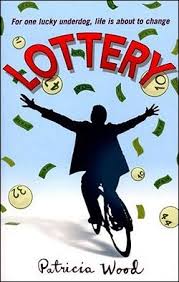
Lottery, by Patricia Wood

I picked up this book with some apprehension as its story, of a young man with Downs' syndrome who wins 12 million dollars in the lottery, seemed to suggest too much of 'Forrest Gump' and the rather over rated 'The Curious Incident of the Dog in the Night Time'. Indeed one could draw several parallels with both, especially the former - a simple hero with a tough talking maternal figure , the war-shattered best friend, the beautiful girl with her own secrets who appears way out of the hero's league.

Perry Crandall, the protagonist, lives a simple life with his grandmother and a small group of friends in smalltown USA. He has to put up with a lot of cruelty and ignorance from the people around him, including his own family, despite being independent and employed. When his grandmother dies, Perry at first finds himself cheated and abandoned by his family members and struggles to start afresh. Then he wins the lottery, becomes an overnight celebrity and everything is different. In a world where everyone is suddenly his friend and the people who once scorned or ignored him are now taking notice, Perry has to decide what his priorities are.

Much like "The Curious Incident..", this story is told in the first person in deliberately simple prose, to reflect the world through Perry's eyes. 'I am an auditor", he says. An auditor is a listener.." And that is indeed what Perry does best, as he lets the voice of his Gram guide him through the minefield that his victory threatens to become. He is smart but not shrewd, aware that his family is desperately trying to take the money from him, even as he writes them an endless series of cheques.

The plot follows a very conventional trajectory, with strong hints of Gump throughout (though Perry, thankfully, does not become an unwitting part of various landmark events in American history). He falls in love, suffers heartbreak, and finds it again. Some scenes felt contrived - the slapstick routine where Perry finds himself alone with Keith and a snarly dog in his cousin's house, for instance, or the impulsive trip to Hawaii where nothing really happens. At some point, though, I was won over. Much like its slow but sensible protagonist, the plot steadily works towards its predictable but still uplifting end.


It's a moral tale, of good and bad, the power of love over the lure of money, the value of friends and family. Nothing very novel, but told well through its simple, almost monotonous narrative.It's slow at the onset, but rewarding for readers who stay the distance with it. You can't help but cheer for this sweet courageous hero, and his real victories - finding love, friendship and purpose.


Monday, April 27, 2009

Same old, same old

That was the predominant feeling I came away with, after reading Window Seat: rush-hour stories from the city, by Jahnavi Acharekar. It plays with all the usual stereotypical characters we have come to associate with Mumbai- socialites, struggling models, cocaine heads, Parsi schoolteachers, Goan hairdressers - but rarely displays the writing skills to raise them from the mundane to the memorable. Indeed, a lot of the plotlines sound familiar, and remind me of stories I've read before. Several stories careen towards the melodramatic -'Moonshine', for instance, 'The City as Cinderella' or 'China'. Still others feel contrived and exaggerated, like 'Bambai ki Sair' or 'Driving Mr Dasgupta'.

The book begins with promise - restrained prose marks the narration of an encounter between two people at a beach and the relationship that develops, in 'A Game of Cards'. 'A Good Riot' is again a chilling and well crafted tale about a child's experience of a riot. I also liked the structure of the story 'Waiting for Ganesh' .But very soon after that, the book went downhill for me, with its uneven writing and rather marked tendency towards brand name dropping (a bow, perhaps, to the author's stint in advertising). I found these constant references to products rather annoying; they certainly add nothing to the prose, except to make the occasional story seem dated - are Smash Tshirts and Double decker chocolates even in production anymore?

This is a book of memorable (though hardly original) characters, but rather lacklustre writing. Florid prose abounds; sample this;
'.rancid abuse loses itself in the foetid environment", (A Good Riot); and
' ...brazen locks delicately held in place by cheap hair products framed a rugged face that flaunted a carefully rehearsed lopsided smile, blissfully aware of its more-than average good lucks'... (Discovered) .

I was also a little puzzled at first at the number of stories here that had nothing to do with Mumbai. 'Tivoli Park', for instance, is a wistful ode to a childhood in Kolkata; ' The Couple', an unremarkable retelling of the old 'canoodling couple mistaken for ghosts' yarn, set in Kerala. 'China' is again about a woman growing up in Kolkata, and finding self affirmation in a foreign country that is never mentioned, and who merely meets the narrator at the Mumbai airport. Similarly with 'First Cousins', a story about childhood betrayal. But then again, Mumbai is nothing so much as a city of migrants, of people in transit, often yearning to be elsewhere. And for many, Mumbai is not so much a place as a state of mind - glamour mecca for some, a nightmare for others, a constant struggle for everyone else in between. I wish this feeling , the grip this city has on its citizens, had been better captured.

There is an interesting device used in the second section, where a scene is first laid out and then individual characters are followed in seperate stories. But the characters remain stock stereotypes, and the reader never once gets a peek into their head or learns anything new. The section I was especially irritated by was the set of stories of women on a train about to blow up (inspired, no doubt, by the 2003 local train blasts in the city). And what irritated me, apart from the frothy prose - the rather flimsy use of a calamity to end these stories with a flourish. Again, choosing melodrama over language, to mark these characters.

A book like the train journeys it seems to hint at in its title - offering fleeting views of people you will forget even before you have turned away.


Monday, February 9, 2009

The Post-Birthday World, by Lionel Shriver


Towards the end of this book, two of the central characters have this conversation:

"So what do women prefer? For their men to be fine? Or luuuuvly?"
"Oh, whichever a woman ends up with, she'll wonder if she wouldn't rather have the other."

That pretty much sums up the premise of The Post-Birthday World - the What If, explored. Irina McGovern, a talented but little known illustrator of childrens' books, has lived nearly ten years with solid but boring Lawrence. Then one night, she finds herself stoned,alone and within kissing distance of the handsome and exciting Ramsey . Should she lean in for that kiss and destroy her comfortable, if predictable, life with Lawrence. Or step away and preserve that ordinary happiness?

The book then goes on to explore either possibility. Alternate chapters plot her life over another five years or so, as her relationships progress, flounder and reach their seperate conclusions - essentially, two novels in one. Her relationships in turn influence her growth as an illustrator, with her career following different paths with either choice.


Lawrence supports her career, is dependable, an intellectual and a fellow American. But he is also patronizing and often distant, and more a creature of routine than Irina can bear. Ramsey is a rich and dashing snooker player, and has very little in common with Irina, yet he listens to her in a way Lawrence never has, and she feels a chemistry and connection to him that she never really had before. Being with Ramsey also brings her illustrations to life - she creates a successful book blazing with colour and vigour that earns her fame. Success eludes her, however, while she stays with Lawrence. And, even as she basks in the quiet glow of her moral choice to stay faithful to him, she finds Lawrence receding from her.Most devastating of all, neither man is quite what she thinks they are.


This was an extremely long book (600 pages), and needessly so. It is no epic saga, after all, do we need an account of practically every conversation, meal and walk Irina takes in either life, to understand her better? Both storylines follow the same points of reference in Irina's life - incidents, meetings with people, Christmas at her mother's, the World Trade Centre crashes - with her responses to each varying depending on the choice she has made. However, this soon falls into a rather predictable rut and the disappointments ahead for her are a foregone conclusion for the weary reader. While I was intrigued by the concept of parallel lives,this book quickly became a tedious read for me, and the over usage of snooker terminology to describe Irina's life with Ramsey was frankly annoying. The wordiness also ruins the suspense, as you have to wade through page after page to see what happens next.


The character of Irina was very believable, though not always comfortable for me. She is emotionally needy, still burdened by the inadequacies she felt as a child, still at odds with her domineering mother. This is no superwoman, but a woman who would dither and second guess herself, and whose need for true, endless love is bigger than anything else in her life. And despite which choice she makes, she is unable to shake off her attraction for the one she turns away from, with predictably unpleasant consequences. It doesn't help that both men are themselves flawed. I got the feeling that she was attracted to these men because they represented the kind of person she wanted to be herself. Another interesting touch was the childrens' stories Irina develops in the book, which essentially mirror her own dilemmas .


The last chapter is a nice touch - it could belong to either story. I do wish, however, that the author hadn't resorted to the death of a central character as a device to resolve the two stories and lift Irina to a state of grace as selfless caregiver/ friend - and I wish we could have been spared the homilies on life and loving. There is a suggestion here that Irina may be at another crossroad again - will she get back with one of the men again, or walk away?

For Irina's sake, I hope it's the second, but that is a sequel I am unlikely to seek out and read.