Showing posts with label memoir. Show all posts

Thursday, November 11, 2010

The floating worlds of the exile

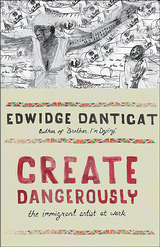
Create Dangerously : The immigrant artist at work

by Edwidge Danticat

Princeton University Press

‘The poet turns the world to glass, and shows us all the things in their right series and procession,’ Edwidge Danticat writes, quoting Emerson. In these twelve eloquent essays, Danticat does just that as she examines the many dilemmas of being a creative person exiled from their homeland,. Through the prism of her personal experiences and tenuous associations with her homeland, and in her interpretations of its troubled history and that of individuals she has interacted with, Danticat paints us a portrait of her Haiti – her ‘floating world’ as it were, and its tortuous struggle for peace and stability.


‘Create dangerously, for people who read dangerously’. These words by Camus have defined Danticat’s development as a writer, and they are central to Danticat’s defence of what she deems the artist’s purpose – to bear witness. In essays like ‘Daughters of Memory’, ‘I Speak Out’ and ‘Acheiropoietos’ , she profiles Haitians who have done just that – borne witness to the atrocities committed on Haitians , displaying what she calls ‘guapa’ – a courageous beauty.


In the opening paragraphs of ‘Create Dangerously’, the first of these quiet yet powerful examinations of identity, Danticat walks us, with excruciating slowness through an execution. The two men at the centre of this gruesome tableau, Marcel Numa and Louis Drouin are members of a rebel group trying to bring down the Duvalier dictatorship, and the public spectacle of their deaths will haunt generations of Haitians. They certainly haunt Danticat, even though she wasn’t even born at the time of this incident. Quoting Camus again - “..a person’s creative work is nothing but a slow trek to rediscover, through the detours of art, those two or three images in whose presence his or her heart first opened.”- Danticat’s essays reveal how these, and other horrors have been akin to creation myths for creative Haitians like her, intrinsic to what Basquiat calls ‘cultural memory’ in ‘Welcoming Ghosts’, Danticat’s incisive exploration of the young artist’s work and influences.


Dangerous writing – and reading- had something of a rich past in Haiti under Duvalier, where even the suggestion of dissent was liable to get you killed. The title essay of the book examines how, in the claustrophobia that was life under the Duvaliers, people chose clandestine methods of voicing their anguish, through the secret staging of plays and the reading of classics by foreign, or long dead authors like Cesaire, Fanon and Camus. “The fact that death prevented one from being banished,” she wryly notes, “..made the ‘classic writers all the more appealing. “


Sadly, lesser mortals do not always enjoy this posthumous immunity. Does death reverse exile, Danticat wonders in ‘The Other Side of the Water’ , as she recalls her attempts to have her cousin Marius’s body flown home from Miami to Haiti for burial. For Marius, an illegal immigrant with AIDS, lacks the necessary documents needed for his final flight home and must wait in legal limbo until a solution -or his passport – is found.


Creative stifling, she observes, has effectively silenced whole generations of her countrymen; in turn, it has made the few, like her, who choose to speak out, seem like martyrs.. ”crazy Saints (who) stared out at the world, like lunatics – or quietly, like suicides..” This is not a sainthood Danticat wears lightly; for just under the surface of her words lurks her guilt at having ‘escaped’ (through migration to the United States) and becoming an ‘accident of literacy’ while thousands of Haitians remain uneducated and poverty ridden. She struggles with this notion of being privileged, and with her own identity, as she is repeatedly accused of being 'dyaspora' , and incapable of authenticity when writing about Haiti. Danticat faces this alienation even at home; an elderly relative mourning her dead son says, ‘‘I know it’s your work, but please don’t write what you think you know about Marius.”


Perhaps this is one of the crosses the immigrant writer must bear, regardless of their creative voice – this obligation to be ambassador of a culture and people she is rooted in through the accident of birth. It is a cross Danticat refuses , however; rather she asserts that , by virtue of her craft, she transcends her own geographical boundaries, taking on, with every reading of her work, the nationality of the individual reader. ’Are you free, my daughter?” asks a character at a crucial juncture in Danticat’s debut novel, ‘Breath, Eyes, Memory. Danticat seems to pose that very question to herself repeatedly. ‘Walk Straight’, for instance, describes her guilt and confusion over being accused of misrepresenting Haiti in her writing, particularly over the issue of ‘virginity testing’ that several characters in her debut novel endure. ‘I exploit no one more than myself’, she argues, emphasising her role as a fiction writer, who merely borrows from the truth around her. And yet, a hint of self deprecation creeps into her writing, as she describes, in ‘Flying Home’, how she was ‘at work’ during a national crisis, the inverted commas being her own.


As a writer, Danticat finds she must also battle a kind of collective amnesia. Recalling the sabliyes -the forgetting trees from Haitian lore, that slave ancestors stepped under to free themselves of their memories and dull the pain of leaving home, Danticat observes that the Haitian psyche seems unwilling to step away from their shade, choosing to forget their long and painful history of slavery. It is a history that repeats itself; for Haiti remains a lesser ‘other’ to more powerful neighbours like the United States, even during national crises like the earthquake that ravaged the island earlier this year. In the moving ‘Our Guernica’, the final essay in this collection, she reflects on this inequity, even as her family calmly deals with the loss of loved ones in the earthquake, and begin the process of rebuilding their lives.

It is these images of quiet resilience that are perhaps most telling of Danticat’s floating world, of a country picking up the pieces of its shattered identity yet again – a country and a people undeniably guapa. And it is in the unflinching portrayal of these people and this country, in Danticat’s graceful and passionate commitment to bearing witness to their anguish and their joys, that we glimpse the guapa in her writing as well.


Thanks to Princeton University Press for sending us a copy of the book to review.

Wednesday, June 17, 2009

A war, a gift and one woman's search

The Box from Braunau: In Search of My Father's War, by Jan Elvin
AMACOM
Rel: May 28, 2009
ISBN: 978-0-8144-1049-3


“Soldiers aren’t the only casualties of war”, says author Jan Elvin in the afterword of this engrossing memoir. ” Their families suffer as well although their battles are fought later, on the home front.”

While never diagnosed, Elvin’s father may have suffered the effects of post traumatic stress disorder(PTSD) long after his return from the front as an American soldier during World War II, in turn emotionally scarring his wife and children as well. Struggling to hide his trauma while providing for his family in the years following the War, Bill Elvin steadily became a controlling and emotionally remote father, prone to anxiety, erratic behaviour and sudden bouts of violence when startled. He became a respected reporter and a pillar of the community, but failed to preserve his marriage or build strong bonds with his four children. This book is the story of his daughter’s attempt , nearly fifty years later, at understanding what he went through during the war, and how this might have affected his life thereafter.

“The Box from Braunau : In Search of My Father’s War” begins with the author’s realization that a simple gift her father received during the war from a prisoner he helped liberate from the Nazis might hold the key to finally understanding him .This book chronicles her investigation into his experiences during World War II, many of which he never revealed to his family. As Elvin delves deeper into her research and encourages her father to begin speaking about his experiences, she realizes that he had witnessed not only frontline combat but also the chilling horrors of a slave labour camp in Austria .Meeting other veterans and survivors of the war, she further realizes that her family’s struggle was far from unique;thousands of families like hers struggled with PTSD then, and continue to do so around the world.

The narrative, interspersed with extracts from Bill Elvin’s lucid war time journal , is elegant and restrained; Elvin knows when to step back and let her father do the talking. The gaps in his journal, the issues he felt unable to write about, are filled in with meticulous research, giving the reader a seamless picture of the War from the American perspective. The book also debunks attempts to romanticize the war or civilian life during that period.

'The hills are alive with the sound of murder',says a speaker at a reunion of Holocaust survivors in Austria, not far from where that evergreen hit 'The Sound of Music' was filmed. 'The hills are alive with the sound of torture'. For every one with a sense of nostalgia about the so-called 'Good War', those lines serve as reminder of the true horrors the War stood for -the mass slaughter of innocents that the Nazis were allowed to get away with, as well as the needless loss of civilians and soldiers alike in a conflict that could have been prevented with sound economic reform.

Elvin painstakingly builds up a portrait of her father by delving right back into his childhood, examining the incidents that shaped him and guided him towards the choices he made. Bill Elvin emerges as a flawed but remarkable man, displaying great courage under adversity and dedicated to his family despite their subsequent estrangement. She is honest about her own feelings of anger and resentment towards her parents as she struggled to deal with their separation and the responsibilities this thrust on her. She also touchingly confesses that while the writing of this book may have helped her forgive him, it may have done nothing for her siblings, each of whom was affected in their own way by Bill's behaviour.

As much as this is a tribute to Bill Elvin, it is also about the author’s own search for closure on a lot of unresolved issues she had with her father. It is heartening to note that she does indeed achieve this and, towards the end of his life, grow closer to him. Above all, the book seeks to reach out to families of soldiers in past and ongoing combat zones around the world, to help them deal with the psychological battles that may continue long after they return home.

Thanks to Alice Northover of AMACOM Books for sending me a copy of the book to review.

Here's another book that looks at PTSD in a soldier from another Great War.

And here and here - past reviews of stories from the Holocaust.

Monday, April 13, 2009

Seven Summers: A Memoir, by Mulk Raj Anand


Mulk Raj Anand, considered one of the greats of modern Indian literature, was known for his sympathetic portraits of the poor and marginalized in Indian society, as also his use of Hindi and Punjabi in his English writing. He was also one of the earliest Indian authors to gain an international audience for his work. Seven Summers: A Memoir, is the first of a seven volume autobiography that Anand had planned but never completed.


This book is a charming recollection of the first seven years of the author's life, lived in army barracks in various north Indian cantonment towns, in pre-Independence India. Anand names his protagonist Krishan, but in every other sense the character is modelled on himself, and the characters in the book are frank representations of his own family and friends. The book is structured as a series of vignettes from the author's life, describing incidents and experiences that shaped him as a boy. These are further divided into two sections -The Road and The River. The road represents the journeys and adventures the boy dreams of experiencing. At the very beginning of the book, a young Krishan even ventures across one, an early indication of the curiosity that will characterize him as he grows older.


If 'The Road' is about the yearning for adventure and excitement, a breathless wait for life itself to begin, 'The River' marks Anand's flow through life as he begins these long awaited journeys .This section marks several changes in the young Krishan, his growing awareness of himself and his surroundings, and his gradual disillusionment with several of the people and places he has idolized. He begins school, but his love for learning is dulled by the harsh treatment meted out to him by his teachers and later, as he begins to excel at work, his classmates as well. As the tremors of the Independence movement make their presence felt in the barracks, Krishan's father begins to vent his fears and anger on his children, eroding Krishan's hero worship of him.


At this juncture, Krishan also begins to bond more deeply with his mother whose nationalistic views are at variance with those of her husband's. This relationship is clearly the core of Krishan's childhood - it shapes his opinions, and even his relations with everyone else around him. The portraits the author draws of his family are not always flattering, yet his love for the people most important to him is clearly evident. He does not spare himself either - Krishan is portrayed as jealous, needy for attention and capable of spite and manipulation. He is fearless and impudent, also insatiably curious, academically bright, and eager to show off his knowledge, a fact that wins him adult affection, but also the spite of his friends and brothers. And he is no innocent - at the age of four and five, he is already aware of the sensuous charms of physical contact with his female relatives.


The author skillfully recreates the heat and dust of small town India, the petty squabbles and small pleasures of his childhood in the barracks. The book also deftly reveals the acute notions of caste and prejudices between communities that divided people then, and still do now. Krishan is warned against playing with 'lower caste' boys or eating in his Muslim friend's house, even though his own family is neither vegetarian nor high-born, and his mother is a loyal follower of the Aga Khan! Most poignant are the scenes revealing prevailing sentiment against the so-called untouchables- in particular, one where Bakha, a sweeper boy, assists a seriously injured Krishan, only to be berated for polluting the boy with his touch. Incidentally, Bakha is also the name of the protagonist of Anand’s famous novel, Untouchable, which suggests that this boy from Anand’s childhood may well have influenced that book.


Anand has been credited with being among the first Indian writers to present a child's view of the world. But I felt that this was not a child's view, so much as that of an adult looking back on his childhood. The reader is not always allowed to merely view and understand an incident as seen by Krishan, but rather have it filtered through the writer's own analysis of it., something I found quite dreary at times. In this regard, I think R. K. Narayan's simple yet timeless Swami and Friends stays true to a child's vision, while still conveying larger ideas about the time and place in which it is set. (Here’s an earlier post about some other stories that do a wonderful job of this.)


I also wish that Anand had stuck to using vernacular phrases in their original form in the text, rather than resorting to switching between these, and their rather strange English translations. This is especially alarming in the rather frequent instances when ripe abuse is used in dialogues between characters. Nevertheless, these are still minor details in this engrossing coming of age story


I also liked the striking cover of the book - a boy in silhouette, precariously balanced on a post, with his arms reaching up towards the darkening sky. It wonderfully captures the mood of the book, the joys and struggles -and isolation - of Krishan, his resilience and his unquenchable spirit in the face of the many hurdles he faces in his journey through life.


Wednesday, March 4, 2009

A Charmed Life


'Eat Pray Love : A Woman's Search for Everything' by Elizabeth Gilbert is a breezy, well written memoir about the author's journeys through Italy, India and Indonesia seeking happiness, God and purpose.It is upbeat,full of self-deprecating wit and colourful characters, and has a fairy tale ending. The fact that it is all true makes it all the more compelling.

At her lowest, crumpled up and weeping on a bathroom floor, Gilbert discovers both God and her inner voice, and they guide her through some more dark moments- divorce, an ill fated rebound affair,anti-depressants. And then she is ready to travel. First stop, Italy, where Gilbert dedicates herself to a few months of learning and speaking Italian, eating pasta and practicing celibacy. She succeeds with all three. Next stop, India, where she joins a remote ashram and struggles with more celibacy, austerity and meditation.Finally, in the lush green paradise that is Bali, Gilbert finds love, happiness and a cause to work toward - collecting funds to help a friend buy a house.

Gilbert's writing skills are considerable - she can keep you hooked with long discussions on yoga and the levels of consciousness in meditation, as well as with stories of her mishaps and adventures. She turns the same keen eye and gentle humour on herself as she does the people she befriends in the three countries she visits. She does a very good job of standing by and observing herself , describing her highs and lows with honesty and compassion.

Reading this book, I found myself saying "What incredible luck! What a charmed life!" Very little goes wrong for Gilbert on this journey (generously funded by advances on this book, which she was already planning to write) - she meets wonderful people who treat her well, finds amazing houses to live in, stumbles upon heavenly pasta and love equally easily. Pesky urinary infections and infected leg wounds clear up instantly thanks to her friendly neighbourhood healer. Her attempt to locate a Balinese healer with very little information other than his name is instantly successful. A night on a rooftop helps her find closure, she even learns to meditate with success.
'You have more luck than anyone I ever knew", the healer tells her and, reading this book, you have to agree. You know this book will end happily for its heroine from very early on.

At one level I liked the sunny, 'all's-well' quality of the book, but it also left me a little bemused. Her descriptions of her problems alternate between amused philosophical detachment and mocking humour - she makes her periodic bouts of depression and loneliness in Italy sound fun! And while we never know what her problems really were, we certainly get a lot of candor about sex, masturbation and her wooing by Mr Right. She makes her road to recovery seem so appealing and achievable that a lot of her readers might probably feel like following in her footsteps, if they can afford to. Even she perhaps realizes how seductive she makes her whole ashram experience seem, as she never reveals its location or even the real names of the people there. And a rather self congratulatory note does creep into the writing as she goes from one success to the next.


Another impression I came away with was how clearly her religious experience seems compartmentalized- God is never again mentioned after she leaves India. She meditates and spends time with healers,sure, but she also rather easily moves back into the life of an expatriate and all the pleasured she denied herself at the ashram. Incidentally, she never really travels through India at all, but spends the entire time in the ashram , mingling for the most part with other non-Indians. I must confess though, I was rather relieved by this, as this memoir could very well have descended into the anecdotal evidence about India - poverty, filth, traffic, begging children, colourful locals speaking weird English - that characterizes most Western travel writing on India. For example, these books. Finally, the choice of India seems really only based on the I in its name (to complete the I trinity) and to lend a certain exotic appeal to the book, as she could just as well have found austerity, seclusion and wisecracking Americans in Idaho.


Overall, cheery and uplifting, witty and wise - a good weekend read.